
Stair parts · 7 min read
Banister: What Is a Banister?
"Banister" is the everyday word for a stair railing or handrail. Learn how it differs from balustrade and baluster, and what people usually mean when they say it.
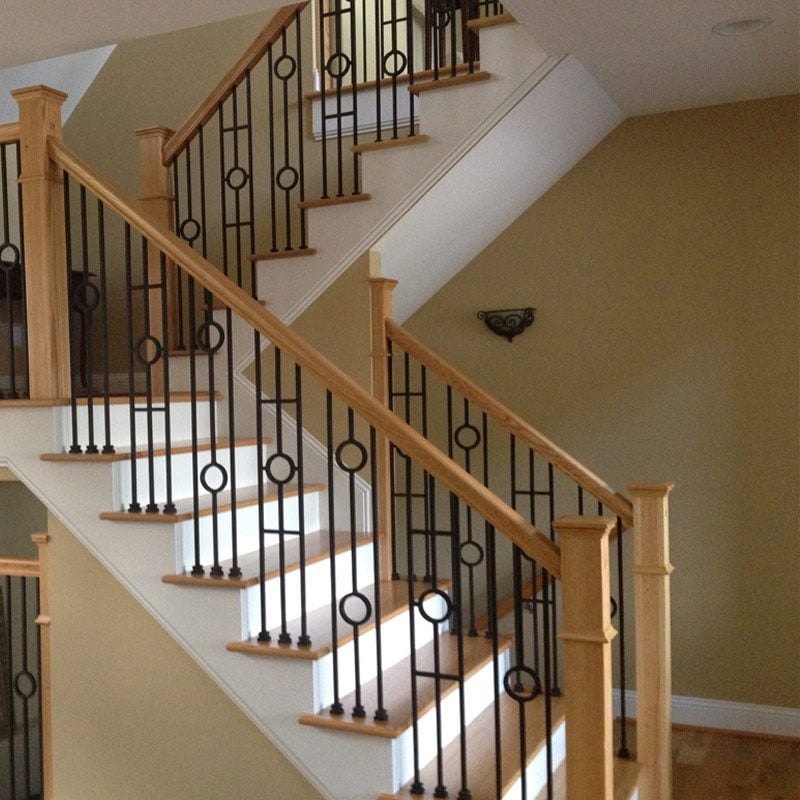
"Banister" is one of those words everyone uses but nobody defines the same way twice. In everyday speech, it most often means the handrail you grab on a staircase — or the whole railing assembly. Technically, it refers to the handrail. Practically, it gets applied to anything from the single gripping rail to the entire system of posts, balusters, and rail together. It's part of the broader vocabulary of parts of a staircase, and understanding what it does and doesn't mean saves a lot of confusion on stair projects.
Banister or Bannister — Which Spelling?
Both spellings show up in print. "Banister" is the preferred form in most American and British style guides. "Bannister" (with a double n) is a common variant and a legitimate alternate spelling — it's just less standard. If you're writing for print or the web, go with "banister." Both spellings refer to the same thing.
The word traces back to "baluster" through French, with the spelling shifting over several centuries. The earliest English uses referred specifically to the balusters, not the rail — but modern usage flipped that association almost entirely.
Banister vs. Handrail
These two terms cause the most confusion, and the answer is simple: they refer to the same physical object.
Handrail is the technical term. It's what building codes, architects, and stair suppliers use. A handrail is the graspable rail that runs along the stair for support. See the what is a handrail article for a full breakdown of its parts and types.
Banister is the informal everyday word for the same thing. Someone saying "I need to replace my banister" almost certainly means they need a new handrail — or possibly the whole railing.
In trade conversations, you'll rarely hear "banister." Suppliers, contractors, and code officials all say "handrail." If you're shopping or specifying, use the technical term to avoid ambiguity.
Banister vs. Balustrade
This is the other important distinction.
A balustrade is the complete railing system: handrail, balusters, newel posts, and base rail together. It's the whole assembly. When someone says "my banister is falling apart," they probably mean the balustrade — balusters are loose, the rail is wobbly, the newels are rotted.
A banister, in its most precise sense, is just the handrail portion of that system.
In practice, most homeowners use "banister" to mean the balustrade. That's not wrong — language evolves with how people use it. But if you're talking to a contractor or supplier, knowing the distinction helps you get an accurate quote.
Read more about the complete system in the what is a balustrade article.
Banister vs. Baluster
This confusion trips people up more than any other.
A banister is the rail you hold. A baluster is one of the vertical posts beneath it.
These are completely different components. The banister (handrail) runs at an angle from top to bottom of the stair at gripping height. The balusters stand vertically between the rail and the treads or floor, filling in the open space.
You hold the banister. The balusters hold the banister up.
The words even look similar — "banister" and "baluster" share a root. That's probably why the confusion persists. They come from the same etymological family, but they name different parts.
What People Usually Mean by "Banister"
Here's the practical note that matters most for anyone in the stair industry.
When a homeowner calls and says "I need a new banister," don't assume they mean just the rail. In most cases, they mean the whole railing. Balusters are loose. The newel post wobbles. The rail feels rough or looks dated. They want everything.
Confirm scope before quoting. Ask: "When you say banister, do you mean just the handrail itself, or the whole railing system including the newel posts and balusters?" That single question prevents misquotes and sets the right expectations.
The stair remodel cost guide breaks down what a full balustrade replacement typically involves and costs, which is usually what a "banister replacement" actually turns into.
What the Standard Height of a Banister Is
Whether you call it a banister or a handrail, the code requirement is the same: 34 to 38 inches measured vertically from the tread nosing to the top of the rail. At level sections and landings, the residential minimum is 36 inches.
The handrail height requirements page covers how to measure correctly and what to do on landings vs. the rake.
Shop railing
If you mean the rail itself, you want handrail. If you mean the whole assembly, you need rail, balusters and newels together.
Stair handrail · Wood balusters · All newels
FAQ
What is a banister?
A banister is the everyday informal word for a stair handrail or the whole railing assembly of a staircase. Technically it refers to the handrail — the graspable rail you hold. In common use, it often refers to the entire balustrade: rail, balusters, and newel posts together.
What is a bannister?
"Bannister" with a double n is an alternate spelling of "banister." Both refer to the same thing: the handrail or railing assembly of a staircase. "Banister" is the more standard spelling in most style guides.
Is "banister" the same as "handrail"?
In practice, yes. Both refer to the gripping rail that runs along a staircase. "Handrail" is the technical and code term. "Banister" is the informal everyday word. When someone in the trades says "handrail," and a homeowner says "banister," they're usually talking about the same object.
What are the parts of a banister?
If you mean the whole railing system, the parts are: the handrail (the rail you grip), the balusters (vertical posts beneath the rail), the newel posts (large anchor posts at the base, turns, and top), and the base or shoe rail (in some systems). If you mean just the handrail itself, its parts include the profile, plowed groove, returns, and connecting fittings.
What is the standard height of a banister?
The building code (IRC R311.7.8) requires handrail height to be 34 to 38 inches measured vertically from the tread nosing to the top of the rail. At landings and level sections, the residential minimum guardrail height is 36 inches.
Internal links: Hub: Stair Anatomy · What Is a Handrail? · What Is a Balustrade? · What Is a Baluster?
Keep reading
All resources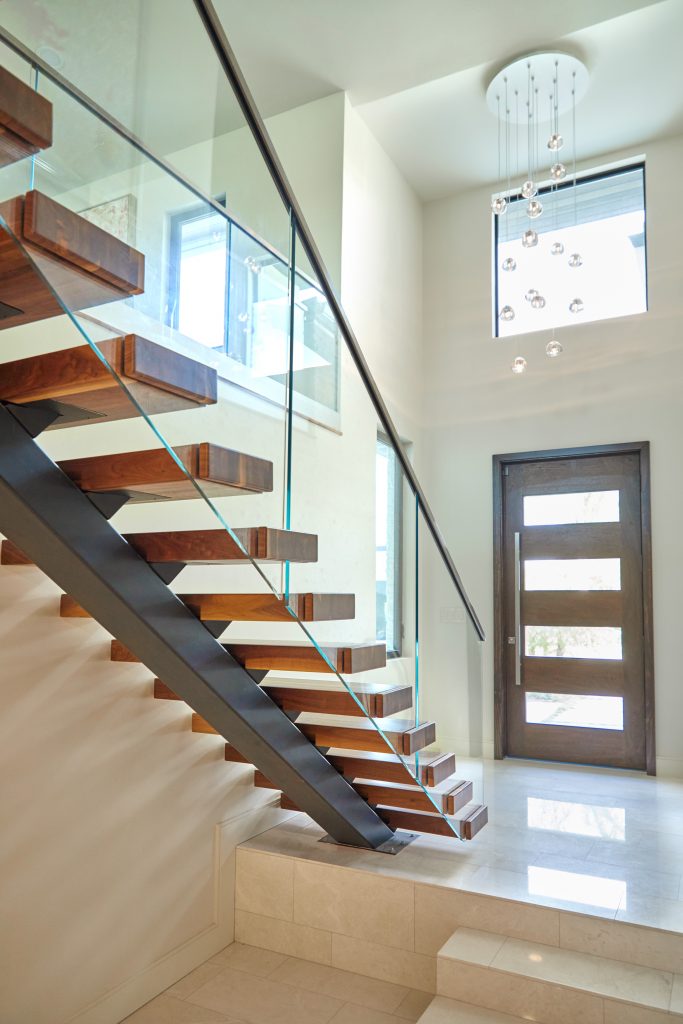 GuideStair partsRise and Run: What Are They and How Do You Calculate Them?Rise and run are the two core dimensions of every stair step. Learn the standard sizes, how to calculate them, and what the building code requires.8 min read
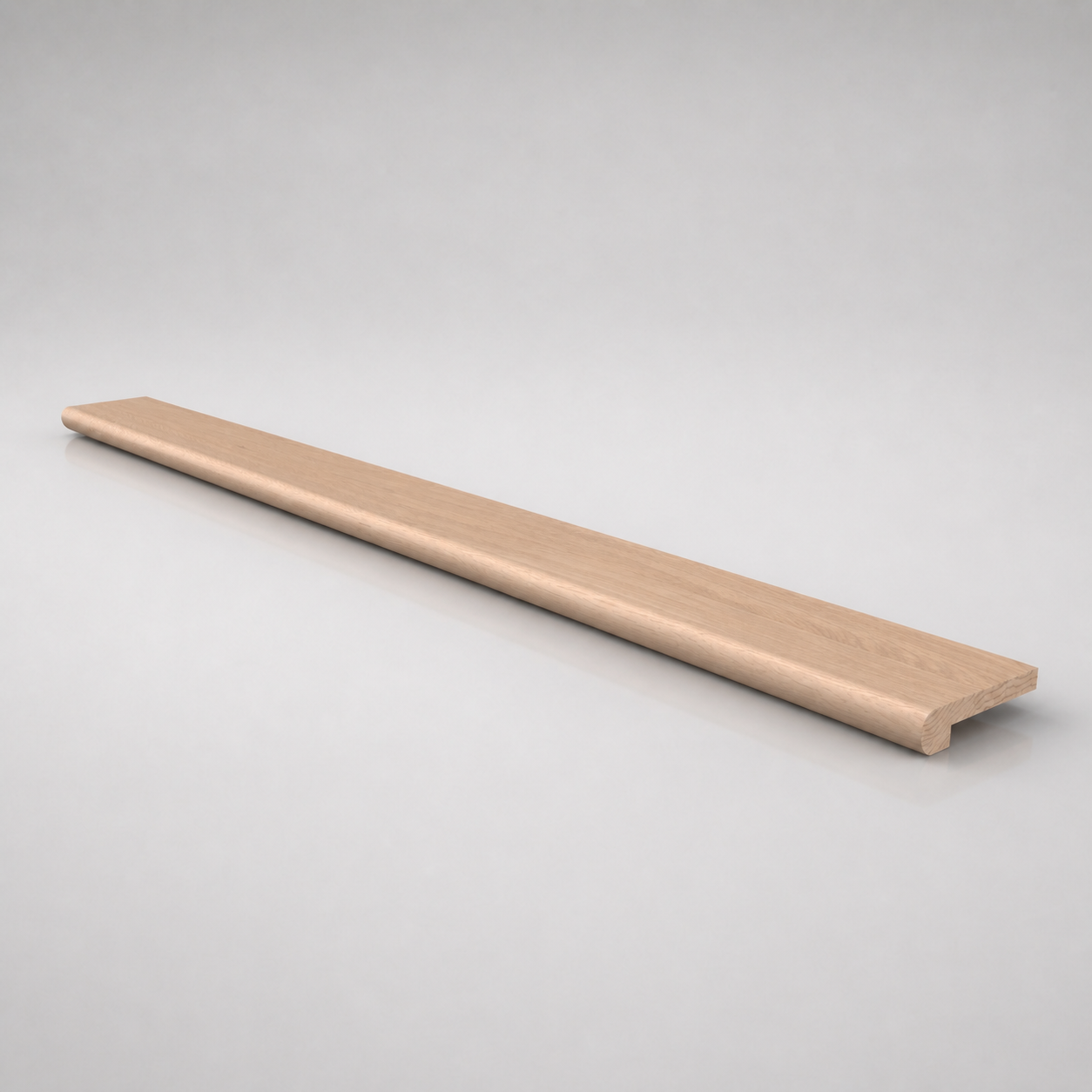 GuideStair partsLanding Tread: What Is a Landing Tread?Learn what a landing tread is, how it differs from a stair tread, where landing treads are used, and when you need a landing panel instead.8 min read
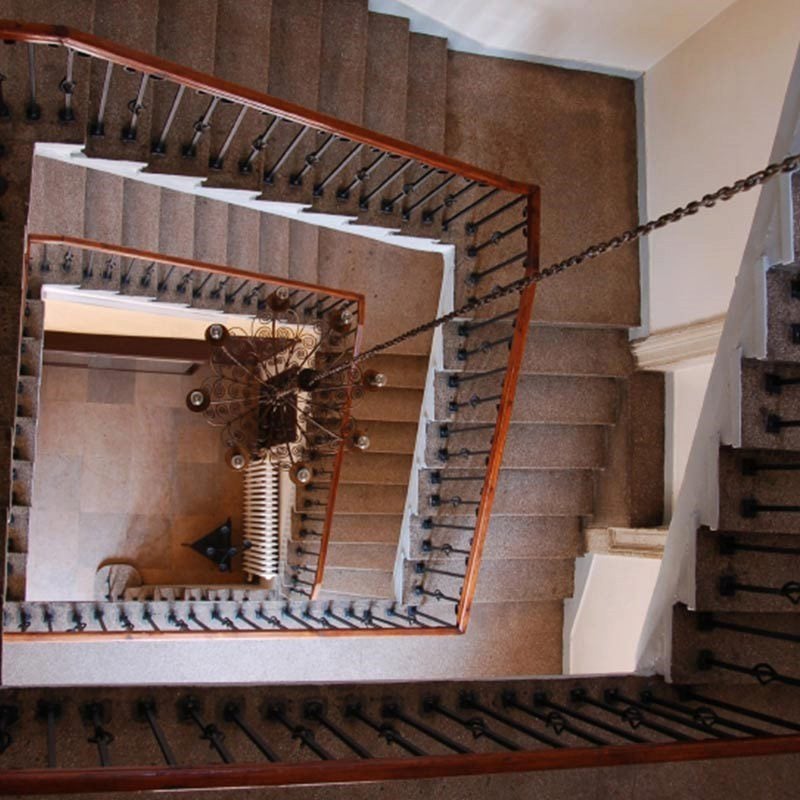 GuideStair partsBaluster: What Is a Baluster?A baluster is the vertical post that fills the open space of a stair railing. Learn how they differ from spindles and pickets, sizing, spacing, and more.9 min read