
Stair parts · 37 min read
What Are the Parts of a Staircase Called? Complete Anatomy & Terminology
The complete guide to stair parts — treads, risers, stringers, balusters, newel posts, handrails and more. Diagrams, definitions, and terminology for every component.
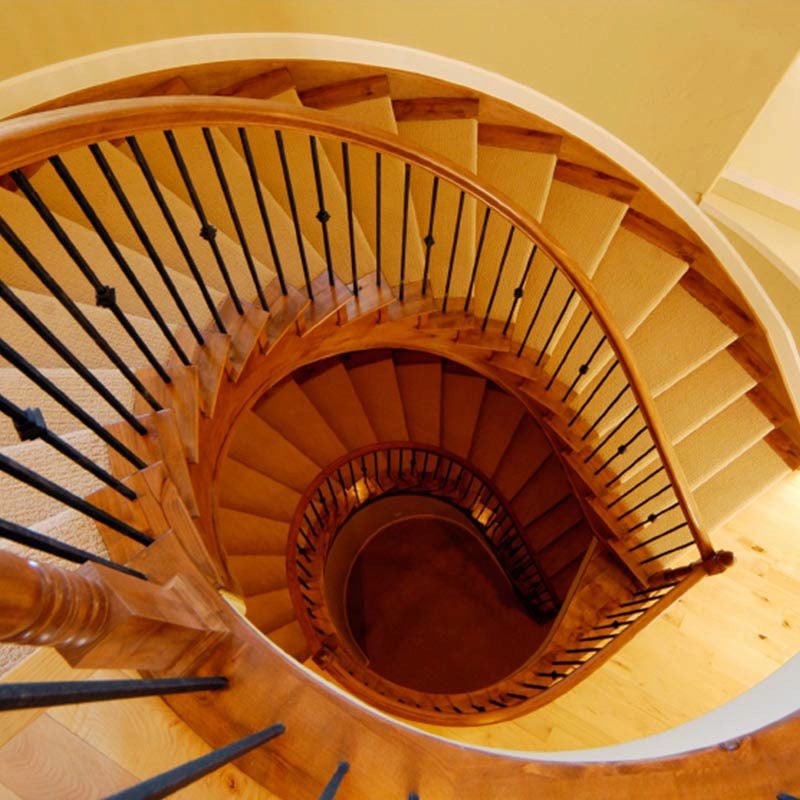
A staircase has more named parts than most people realize — and knowing the terminology matters when ordering parts, reading code, or talking to a contractor. Get one term wrong on a quote and you might receive the wrong component entirely. This guide names and defines every component, organized by assembly, so you can order with confidence.
Jump to a part
Assembly | Parts |
|---|---|
Tread · Riser · Nosing · Landing tread · Starting step | |
Stringer · Skirtboard · Carriage · Soffit · Landing · Rise & run | |
Balustrade · Handrail · Banister · Baluster · Spindle · Newel post · Box newel · Shoe rail · Fillet · Rosette · Finial · Fittings | |
Reference |
The five words people mix up
Most people arrive here because they don't know which word they want. If that's you, start here.
Term | What it actually means | What people usually mean by it |
|---|---|---|
Handrail | The graspable rail you hold | Correct — this is the technical term |
Banister | Informally, the handrail | Often the entire railing, posts and all |
Balustrade | The complete railing assembly | Rarely used outside the trade |
Baluster | One vertical post under the rail | Sometimes confused with banister |
Spindle | Same thing as a baluster | Same thing — regional preference |
If you're calling a supplier: say handrail for the rail, baluster for the posts, and balustrade for the whole system. Those three words will get you an accurate quote.
Parts of a staircase (diagram)
[MASTER DIAGRAM: Full staircase cross-section with numbered callouts for all ~30 parts. Each number anchor-links to its H3 section below. Offered as a downloadable labelled PDF.]
A staircase is four assemblies stacked on one another. The step is what you walk on — tread, riser, nosing. The structure is what holds it up — stringers, carriage, skirtboard. The balustrade is everything you hold or see at the edge — handrail, balusters, newels. Hardware is what fastens it together. The sections below follow that order, from the step up.
[ASSET TO CREATE: labelled stair parts diagram, offered as a downloadable PDF — set href when published] · Order samples before you buy
The step
Tread: what is a tread?
A stair tread is the horizontal board you step on. It's the walking surface of each step, spanning the full width of the stair opening and sitting on top of the stringer or carriage below. Treads take the most wear of any stair component, so wood species, thickness, and finish all matter. Standard residential treads are 10 to 11.5 inches deep (front to back) and typically 1 inch thick for solid wood.
Shop: Wood stair treads · Thick treads · Replacement treads
Full guide: What is a stair tread?
Riser: what is a riser?
A stair riser is the vertical board that closes the space between two treads. It's the back wall of each step, sitting between the nosing of the tread above and the back edge of the tread below. Not every staircase has risers — open-riser stairs omit them for a lighter visual effect — but closed-riser stairs are more common in residential construction and are typically required by code where small children are present.
Shop: Wood stair risers · 8075 stair riser
Full guide: What is a stair riser?
Nosing: what is nosing?
Nosing is the front edge of a stair tread that projects beyond the riser face. Most residential nosings extend 3/4 to 1-1/4 inches past the riser. That overhang adds usable foot space per step, but its main purpose under code is safety: the visible contrast between the nosing and the riser helps people judge depth. Nosing can be integral (milled into the tread) or applied as a separate strip.
See also: Tread · Riser · Landing tread
Shop: 8080 nosing · Molding, nosing & skirtboards
Full guide: What is stair nosing?
Landing tread: what is a landing tread?
A landing tread is a tread installed at the top of a flight where it meets a landing or finished floor. It matches the profile of the stair treads below — same wood species, same nosing profile — so the transition looks intentional rather than patched. Landing treads typically run the full width of the stairway and have a return nosing on one or both ends if the side of the stair is exposed.
See also: Tread · Nosing · Landing
Shop: Landing treads · 8090 landing tread · Landing platforms
Full guide: What is a landing tread?
Starting step and bullnose: what is a bullnose?
A starting step is the bottom step of a staircase, often built wider or differently shaped than the steps above it. A bullnose starting step has one or both front corners rounded into a curved projection that wraps around the newel post. The bullnose profile — a fully rounded front edge — gives the bottom step a finished, furniture-like quality and is one of the details that separates a builder-grade stair from a custom one. Starting steps are typically sold as a complete unit: tread, riser, and curved return already assembled.
See also: Tread · Riser · Newel post
Shop: Starting steps · False treads & risers
The structure
Stringer: what is a stringer?
A stringer is the structural board that runs along the side of a staircase and supports the treads and risers. Most staircases have two stringers: one on each side. A cut stringer (also called an open or sawtooth stringer) has the top edge notched so treads rest on each tooth. A housed stringer has routed grooves that the treads slide into. Stringers carry the load of every step, so they're typically cut from 2x12 lumber or LVL.
See also: Tread
Shop: Skirtboard
More detail: Stringer section in the stair tread guide
Skirtboard: what is a skirtboard?
A skirtboard is the trim board that runs parallel to the stringer along the wall side of a staircase. It's not structural: its job is to cover the gap between the wall and the stair assembly and give the stair a finished edge. Skirtboards are typically 1x10 or 1x12 lumber, routed or notched to fit around treads and risers, and painted or stained to match the surrounding trim.
More detail: Skirtboard section in the stair tread guide
Carriage: what is a carriage?
A carriage (sometimes called a rough stringer or center stringer) is a structural support member that runs beneath the center of a staircase. Wide stairs — typically anything over 36 inches — need a carriage in the middle to prevent the treads from flexing underfoot. Unlike finish stringers, carriages are usually framing lumber hidden inside the stair assembly, never seen after the finish work is complete.
See also: Tread
Shop: Landing platforms
Soffit: what is a stair soffit?
A stair soffit is the finished underside surface of a staircase. From below, a staircase without a soffit shows the raw structure: rough carriages, the underside of treads, and open framing. A drywalled or trimmed soffit closes that off and makes the space below the stair usable or at least presentable. On many open-plan homes, the stair soffit is a prominent visual element and worth finishing carefully.
Landing: what is a landing?
A landing is a flat platform that interrupts a stair flight. Landings serve two purposes: they allow the stair direction to change (as in an L-shaped or U-shaped stair), and they provide a rest point on long flights. Code generally requires a landing wherever a door swings over a stair. Under IRC R311.7.6 a landing must be at least as wide as the stairway, and at least as deep as the stairway is wide — but that depth requirement is capped at 36 inches where the stair runs straight through. A 48-inch-wide straight stair needs a 36-inch-deep landing, not a 48-inch one.
See also: Landing tread · Flight · Rise and run
Shop: Landing platforms · Knee wall cap
Rise and run: what are rise and run?
Rise is the vertical height of a single step. Run is the horizontal depth of a single tread, measured from nosing to nosing. Together, rise and run define how comfortable and code-compliant a staircase is to climb. Most residential codes cap rise at 7-3/4 inches and require a minimum run of 10 inches. Getting these numbers right before cutting a single board is the most important calculation in stair building.
See also: Tread · Riser · Flight
Full guide: Stair rise and run
The balustrade
Balustrade: what is a balustrade?
A balustrade is the complete railing assembly along the open side of a staircase or balcony. It includes the handrail on top, the balusters or spindles in between, the newel posts at the ends and corners, and the shoe rail at the bottom (if present). The balustrade is both a safety system and a primary visual element of the stair. Most of the labor and material cost in a custom stair goes into the balustrade.
See also: Handrail · Baluster · Newel post
Shop: Handrail · Wood balusters · Newels
Full guide: What is a balustrade?
Handrail: what is a handrail?
A handrail is the continuous rail you grip when climbing or descending a stair. It runs the length of the flight, typically at 34 to 38 inches above the nosing line, and must be graspable — that is, sized and shaped so fingers can wrap around it. Handrails are routed from solid wood in profiles like colonial, craftsman, and mopstick. They connect to newel posts at each end and are supported along the wall by handrail brackets.
See also: Balustrade · Newel post · Fittings
Shop: Stair handrail · Straight handrail · Wall-mounted handrail
Full guide: What is a handrail?
Banister: what is a banister?
A banister is a common informal term for a handrail or, more loosely, for the entire railing assembly (handrail plus balusters). Technically, the word has the same root as "baluster" and historically referred to the upright posts themselves. Today most people use banister and handrail interchangeably, and both are correct in casual use. On this site, when we say banister we mean the graspable rail — same component, different word.
See also: Handrail · Balustrade · Baluster
Shop: Stair handrail · Complete rail systems
Full guide: What is a banister?
Baluster: what is a baluster?
A baluster is the vertical member that fills the space between the handrail and the tread or shoe rail below. Balusters prevent falls through the open side of the stair and, spaced correctly (no more than 4 inches apart per code), they keep small children from getting through. Wood balusters come in square, turned, and hollow-box profiles. Each tread typically gets two balusters, though wider treads may need three.
See also: Spindle · Balustrade
Shop: Wood balusters · Iron balusters
Full guide: What is a baluster?
Spindle: what is a spindle?
A spindle is another word for a baluster. The two terms are interchangeable, though spindle is more common in the UK and in older American usage. In some regional markets, spindle specifically refers to a turned (lathe-shaped) baluster as opposed to a square one, but that distinction isn't universal. If a supplier or contractor says spindle, they mean the vertical member between rail and tread.
See also: Baluster · Handrail · Shoe rail
Shop: Wood balusters
Newel post: what is a newel post?
A newel post is the large structural post that anchors the balustrade at the bottom of the stair, at the top, and at any turns or landings in between. The starting newel (bottom post) takes the most stress: it must resist lateral force from anyone who grabs the rail hard. Newels are available in traditional turned profiles, craftsman square profiles, and box newel styles. Proper anchoring — bolted through the subfloor or bolted to the stringer — is critical.
See also: Box newel · Handrail · Balustrade
Shop: Starting newel · Level-run newel · All newels
Full guide: What is a newel post?
Shoe rail: what is a shoe rail?
A shoe rail is a narrow routed rail that runs along the tread line at the base of the balustrade, between the balusters and the treads below. Instead of drilling each baluster directly into the tread, installers secure balusters into the shoe rail, and the shoe rail connects to the treads. This makes spacing adjustments easier and protects the tread surface from individual holes. Shoe rail is also called a base rail or bottom rail in some catalogs.
See also: Baluster · Fillet · Tread
Shop: 6006 shoe rail
Fillet: what is a fillet?
A fillet is the thin strip of wood that fills the routed groove of a plowed handrail or shoe rail between balusters. After balusters are set into position in the rail groove, the gaps between them are filled with fillets cut to exact length. This gives the rail a clean, continuous look — no open slots, no exposed groove. Fillets are cut from the same rail stock and typically come in long lengths that you cut to fit on site.
See also: Shoe rail · Handrail · Baluster
Shop: Handrail & shoe rail fillet
Rosette: what is a rosette?
A rosette is a decorative wall-mounted block that a wall-return handrail terminates into. Where a handrail meets a wall at the top or bottom of a flight, you have two options: return the rail back into the wall with a curved fitting, or terminate it cleanly against a rosette block. The rosette gives the cut end of the rail a finished frame and anchors the last few inches of rail to the wall. Most rosettes are circular or square and match the handrail wood species.
See also: Handrail
Shop: 7037 rosette
Finial: what is a finial?
A finial is the decorative cap placed on top of a newel post. It's the last piece of the post — a turned or carved ornament that completes the visual termination of the balustrade. Finials range from simple rounded pins to elaborate acorns, pineapples, and ball-and-cove profiles. Some newel posts are sold with integral finials; others accept a separate finial that screws or dowels onto the post cap.
See also: Newel post
Shop: Newels and caps
Box newel: what is a box newel?
A box newel is a hollow, square newel post built up from panels and trim rather than turned from a single piece of lumber. Box newels have a heavier, more architectural look than turned newels and are common in craftsman, colonial revival, and transitional-style homes. The interior is typically a 4x4 post for structure; the box casing wraps around it. Box newels can be built to custom heights and widths to suit the scale of the stair.
See also: Newel post
Shop: Box newels · Iron newels
More detail: What is a newel post?
Fittings: volute, gooseneck, easing, turnout, tandem cap
Handrail fittings are the curved transition pieces that connect straight sections of rail at changes in direction or height. The five common types:
Volute: A spiral fitting at the bottom of a rail that curls over the starting newel, no post required.
Gooseneck: A fitting that transitions the rake (angled) rail up to a level rail at a landing or the top of the stair.
Easing: A short curved fitting that transitions between two different rake angles or between rake and level.
Turnout: Similar to a volute but scrolls outward rather than curling inward; used on starting newel posts.
Tandem cap: A level fitting that connects two parallel rail sections, typically at a landing where the rail changes direction 180 degrees.
See also: Handrail · Newel post
Shop: Handrail fittings · Handrail accessories
Full guide: What is a handrail?
Hardware
Handrail brackets
Handrail brackets are the wall-mounted supports that carry the handrail along the wall side of a staircase. A wall rail needs a bracket roughly every 48 inches, though closer spacing (every 36 inches) is better on long flights. Brackets must anchor to studs or solid blocking — drywall anchors alone won't pass inspection. They come in return-to-wall styles (where the rail terminates at the wall) and pass-through styles (where the rail continues). For a dedicated breakdown of bracket types, spacing, and code requirements, see the wall-mounted handrail installation guide.
See also: Handrail · Balustrade
Shop: Handrail brackets · Stair hardware & brackets
Rail bolts, Sure-Tite, dowel screws, epoxy
Stair assembly uses several specialized fasteners, depending on the joint. Rail bolts (also called handrail bolts) are threaded metal rods used to join handrail sections end-to-end and to attach rail to newel posts. Sure-Tite screws are proprietary fasteners for baluster-to-tread connections, driven at an angle for a hidden attachment. Dowel screws connect rail fittings and sections without visible hardware. Epoxy is used where mechanical fasteners alone won't hold, particularly in end-grain glue-ups and when setting balusters into shoe rail.
See also: Handrail · Baluster · Newel post
Shop: Rail bolt kit · Sure-Tite · Dowel screws · Epoxy
Stair configurations
Flight: what is a flight of stairs?
A flight of stairs is an uninterrupted series of steps between two landings or between a floor and a landing. A straight staircase from ground floor to second floor with no landing is a single flight. Add a landing halfway up and it becomes two flights. Code limits the maximum rise of a single flight in most jurisdictions. Knowing how many flights your stair has matters for material takeoffs, railing layout, and code review.
See also: Landing · Rise and run
Full guide: What is a flight of stairs?
Winder: what is a winder?
A winder is a pie-shaped or triangular step used to change the direction of a staircase without a full landing. Where an L-shaped stair would use a square landing platform, a winder stair substitutes two or three wedge-shaped steps that rotate the flight 90 degrees. Winders save floor space but are harder to build accurately and require careful planning: the narrow end of each winder must still meet minimum tread depth at the walking line (typically measured 12 inches from the narrow edge per code).
Straight, L-shaped, U-shaped and spiral stairs
Stair layout type is the first design decision, and it determines nearly everything else about the structure. A straight stair runs in one direction with no turns: simple to build, requires the most linear floor space. An L-shaped stair makes a 90-degree turn at a landing or winder; it fits into a corner and feels less exposed than a straight run. A U-shaped stair makes two 90-degree turns with a landing between parallel flights, common in center-hall plans. A spiral stair rotates around a center column, the most compact option but the hardest to move furniture past and the most regulated by code.
See also: Flight
Shop: Bending handrail · All stair parts
A–Z stair parts glossary
Apron: Trim board installed below a window or, in stair terms, the horizontal trim covering the face of a landing or platform edge.
Balcony rail: A level railing system installed at the edge of an open balcony or loft, as opposed to a stair rail that runs on a rake.
Baluster: A vertical member in a balustrade that fills the space between handrail and tread or shoe rail. See Baluster.
Banister: An informal term for handrail or the entire rail assembly. See Banister.
Box newel: A hollow, panel-built newel post with an architectural, square profile. See Box newel.
Bracket: A decorative corbel-shaped trim piece applied to the exposed end of a cut stringer, visible below each tread on an open-sided stair.
Cap rail: The horizontal top rail of a post-to-post balustrade system that connects the tops of newel posts.
Carriage: A structural center support member running beneath a wide stair flight. See Carriage.
Casing: Wood trim framing a door or window opening; in stair work, sometimes used to trim the opening at the top of the stair well.
Center newel: A newel post installed at the center of a wide landing where two parallel flights meet.
Closed riser: A stair step that has a riser board closing the vertical space between treads. Contrast with open riser.
Collar: A decorative ring or band element used on turned newel posts or balusters to visually separate sections of the turning profile.
Continuous rail: A handrail system that runs without interruption from the bottom newel to the top, transitioning over landings with fittings rather than terminating at each post.
Curtail step: A starting step where the front corner curves outward in a scroll shape (like a volute), wider and more ornate than a standard bullnose starting step.
Dado: A rectangular groove routed across the grain of a board; used in housed stringers to receive tread and riser ends.
Decking: The walking surface material on an exterior stair or deck, laid horizontally over the structural frame.
Double-start stair: A grand staircase with two separate flights that diverge from a shared starting landing, meeting again at the top or traveling to different destinations.
Drop newel: A newel post that hangs down from a ceiling or soffit at the base of a balcony rail, used where the post can't be floor-mounted.
Easing: A curved handrail fitting that transitions between two different pitch angles. See Fittings.
Face stringer: The visible finish stringer on the open side of a staircase, often a routed or trimmed board applied over the structural rough stringer.
Fascia: A horizontal trim board covering the face of a structural member, such as the band joist at a landing edge.
Fillet: A thin wood strip that fills the open groove of a plowed rail between balusters. See Fillet.
Finial: The decorative cap on top of a newel post. See Finial.
Flare: A design element where the bottom of a starting step widens outward beyond the stringer line, creating a curved or angled projection.
Flight: An uninterrupted series of steps between two levels or landings. See Flight.
Gallery rail: A horizontal railing along an interior balcony or mezzanine, typically a level run rather than a sloped stair rail.
Gooseneck: A handrail fitting that transitions a rake rail up to a level run at a landing. See Fittings.
Grooved rail: A handrail with a routed groove (plow) along its underside for receiving baluster tops; same as plowed rail.
Guard: The code term for any railing system whose primary function is fall prevention (as opposed to a handrail, whose primary function is graspability). A guard must be 36 to 42 inches tall depending on jurisdiction.
Half newel: A newel post that is cut in half along its length and applied flat against a wall, giving the appearance of a full newel while taking up no floor space.
Handrail: The graspable rail running the length of a stair flight, required by code on stairs with four or more risers. See Handrail.
Handrail bolt: A threaded rod used to join handrail sections end-to-end or connect rail to newel post; tightened with a hex wrench through an access hole.
Housed stringer: A stringer with routed grooves (dadoes) that receive tread and riser ends, rather than the sawtooth notches of a cut stringer.
Jack stringer: A shorter secondary stringer used to frame a landing or platform within a stair well.
Kneewall: A short wall, typically under 4 feet, built at the edge of a landing or loft to provide backing for a balustrade.
Landing: A flat platform between stair flights or at the top or bottom of a flight. See Landing.
Landing newel: A newel post located at a landing where the stair changes direction; anchors the rail transition and provides structural continuity.
Landing tread: A tread installed at the top of a flight where it meets a landing. See Landing tread.
Level quarter turn: A handrail fitting that transitions a horizontal rail through a 90-degree horizontal turn, used at landings where the rail direction changes.
Mitre: A joint cut at an angle (typically 45 degrees) where two pieces meet at a corner; used on skirtboards, risers, and trim at returns.
Mopstick: A simple round or oval handrail profile that is graspable from any direction; required by some codes for wall rails on continuous handrail systems.
Newel post: The structural anchor post of a balustrade, located at the bottom, top, and turns of a stair. See Newel post.
Nosing: The projecting front edge of a stair tread that overhangs the riser face. See Nosing.
Open riser: A stair step with no riser board, leaving a gap between treads; common in modern and industrial aesthetics.
Over-the-post: A rail system style where the handrail runs continuously over the tops of newel posts rather than terminating at them; requires rail fittings at each post location.
Picket: An informal term for a baluster, particularly common with metal balusters.
Pin-top newel: A newel post style with a small cylindrical pin at the top that a rail fitting mounts onto; common in over-the-post rail systems.
Plowed rail: A handrail or shoe rail with a routed groove along its underside to receive baluster tops; same as grooved rail.
Post-to-post: A rail system style where handrail sections terminate into the sides of newel posts, rather than running over them.
Quarter-turn: A fitting or step that changes the stair or rail direction by 90 degrees.
Rake: The slope or pitch of a staircase; a rake rail is a handrail that runs on an angle rather than level.
Return nosing: A nosing piece that wraps around the exposed end of a tread on an open-sided stair, covering the end grain and giving a finished edge.
Riser: The vertical board between two treads. See Riser.
Rosette: A decorative wall block where a handrail terminates at the wall. See Rosette.
Rough stringer: The structural framing member (carriage) cut from dimensional lumber before any finish work; the foundation that finish stringers or skirtboards cover.
Scotia: A concave molding profile used under nosing to create a shadow line between tread and riser.
Shoe: Short for shoe rail. The bottom rail of a balustrade into which baluster bases are set.
Shoe rail: A narrow routed rail along the tread line that receives baluster bottoms. See Shoe rail.
Skirt: Short for skirtboard. See Skirtboard.
Skirtboard: The trim board that covers the gap between the wall and the stair assembly on the wall side. See Skirtboard.
Soffit: The finished underside surface of a stair flight. See Soffit.
Solid baluster: A baluster milled from solid (not hollow or built-up) stock; heavier and more rigid than engineered alternatives.
Solid stringer: A stringer without cutouts; used as a finish stringer on the wall side where treads are supported by a housed groove or by the carriage, not by notches.
Spindle: A synonym for baluster. See Spindle.
Starting easing: A handrail fitting at the very bottom of a flight that transitions the rake rail down to the volute or turnout scroll at the starting newel.
Starting step: The bottom step of a staircase, often built with a bullnose or curtail profile that is wider than the steps above. See Starting step and bullnose.
Stringer: The side structural board that supports treads and risers. See Stringer.
Sub-tread: A plywood or dimensional lumber base layer installed on top of the carriage before the finish tread; adds stiffness and gives a stable glue surface.
Tandem cap: A level handrail fitting that connects two parallel rail sections at a 180-degree landing turn. See Fittings.
Tread: The horizontal board you step on. See Tread.
Tread bolt: A threaded fastener used to secure a tread to the carriage or stringer, often installed from below for a clean top surface.
Turnout: A handrail fitting similar to a volute but scrolling outward; used at the starting post of some over-the-post rail systems. See Fittings.
Up-easing: A handrail fitting that transitions a level rail up to a rake rail at the start of a flight, used in over-the-post systems.
Volute: A spiral handrail fitting at the bottom of a flight that curls over the starting newel, allowing the rail to terminate without a newel cap. See Fittings.
Wall rail: A handrail mounted directly to the wall on brackets, without a balustrade; used on the wall side of any stair, and required on all sides of very wide stairs.
Winder: A wedge-shaped step that changes the stair direction without a landing. See Winder.
Winder tread: The tread board cut to the tapered shape of a winder step; requires more precision cutting than a standard rectangular tread.
Wreath: A curved, three-dimensional handrail section that transitions around a curved or spiral portion of a stair, such as the bottom curl of a curved starting flight.
Frequently asked questions
Q: What is a banister?
A: A banister is the rail you grip on a staircase. The word is commonly used as a synonym for handrail, though some people use it to describe the entire railing assembly: handrail, balusters, and newel posts together. Technically, "banister" and "baluster" share the same Latin root, and historically the term referred to the upright posts. Today, the two terms — banister and handrail — are used interchangeably in most contexts. If someone says "hold the banister," they mean the rail.
Q: What is a stair riser?
A: A stair riser is the vertical board between two treads. It's the back face of each step — the part your toe almost hits when you're climbing. Risers close the space between steps, add stiffness to the tread, and give the stair a finished look from the front. Not all stairs have them: open-riser designs leave that space empty. Where building codes restrict the gap between treads (typically 4 inches maximum), risers or some form of infill are required.
Q: How are newel posts attached?
A: Newel posts are attached by one of three methods, depending on construction. The most secure method is a threaded rod (all-thread) bolted through the subfloor with a large washer and nut underneath; the post slides over the rod and is tightened from inside. A second method uses a through-bolt into the stringer or header, accessible via a plug-covered hole in the post face. A third method — surface-mounting with lag screws alone — is the weakest and not recommended for starting newels that will receive regular lateral force.
Q: What are stair risers?
A: Stair risers are the vertical boards that form the back face of each step on a staircase. Together, they close the gaps between treads and give the stair structure and finished appearance. Risers are typically 1/2 to 3/4 inch thick and painted or finished to match the surrounding trim. The height of each riser — called the "rise" — is one of the two most important dimensions in stair design (the other is the tread depth, called the "run").
Q: What is a newel?
A: A newel — short for newel post — is the large structural post that anchors the railing system at the top and bottom of a staircase and at any turns or landings. It's the heaviest, most prominent single piece of the balustrade. The starting newel at the bottom of the stair takes the most structural stress and must be firmly bolted to the floor framing. The word comes from Old French nouel, "knob" or "kernel" (from Late Latin nodellus, a little knot); in English it came to name the central column that a spiral stair winds around.
Q: What are stair treads?
A: Stair treads are the horizontal boards you step on. Each tread spans the full width of the stair opening and sits on the stringers at each side (and on a carriage in the center for wide stairs). Treads are sized by depth (front to back, measured from nosing to nosing) and thickness. Residential code requires a minimum 10-inch tread depth. Wood species, thickness, and surface finish all affect how long treads will last and how they'll look.
Q: Does the top of the stairs count as a tread?
A: No. The top of the stair is a landing or floor, not a tread. In stair building, treads are counted as the steps you climb, and the top landing is not one of them. This matters for calculating total rise: you count the number of risers, not treads, to determine how many steps the stair has, because the top riser lands you on the finish floor, not on a tread. The top of the stair gets a landing tread (a tread-profile board at the nosing edge of the landing) to match the stair below, but the landing itself is not a step.
Q: What is nosing?
A: Nosing is the projecting front edge of a stair tread that extends beyond the face of the riser below. Most residential nosings project 3/4 to 1-1/4 inches. The overhang gives your foot more landing space per step and helps your eye judge depth as you descend. Building codes require nosings on stairs where risers are present, and they specify both the minimum projection and the nosing profile (no sharp edges, radius requirements). Nosing can be integral to the tread or applied as a separate strip over a square-edged tread.
Keep reading
All resources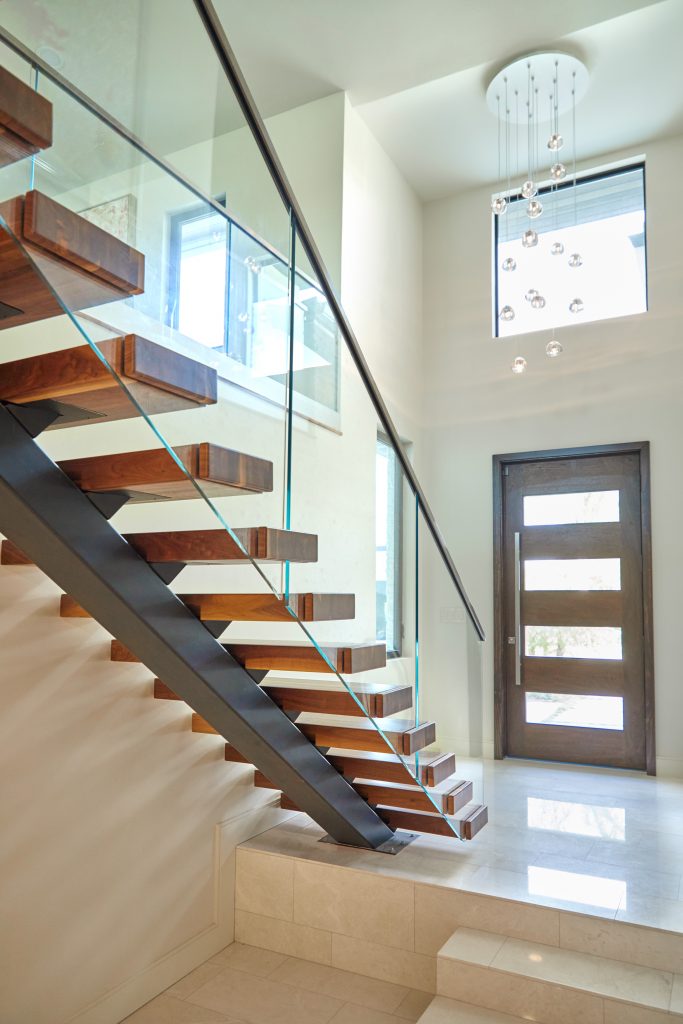 GuideStair partsRise and Run: What Are They and How Do You Calculate Them?Rise and run are the two core dimensions of every stair step. Learn the standard sizes, how to calculate them, and what the building code requires.8 min read
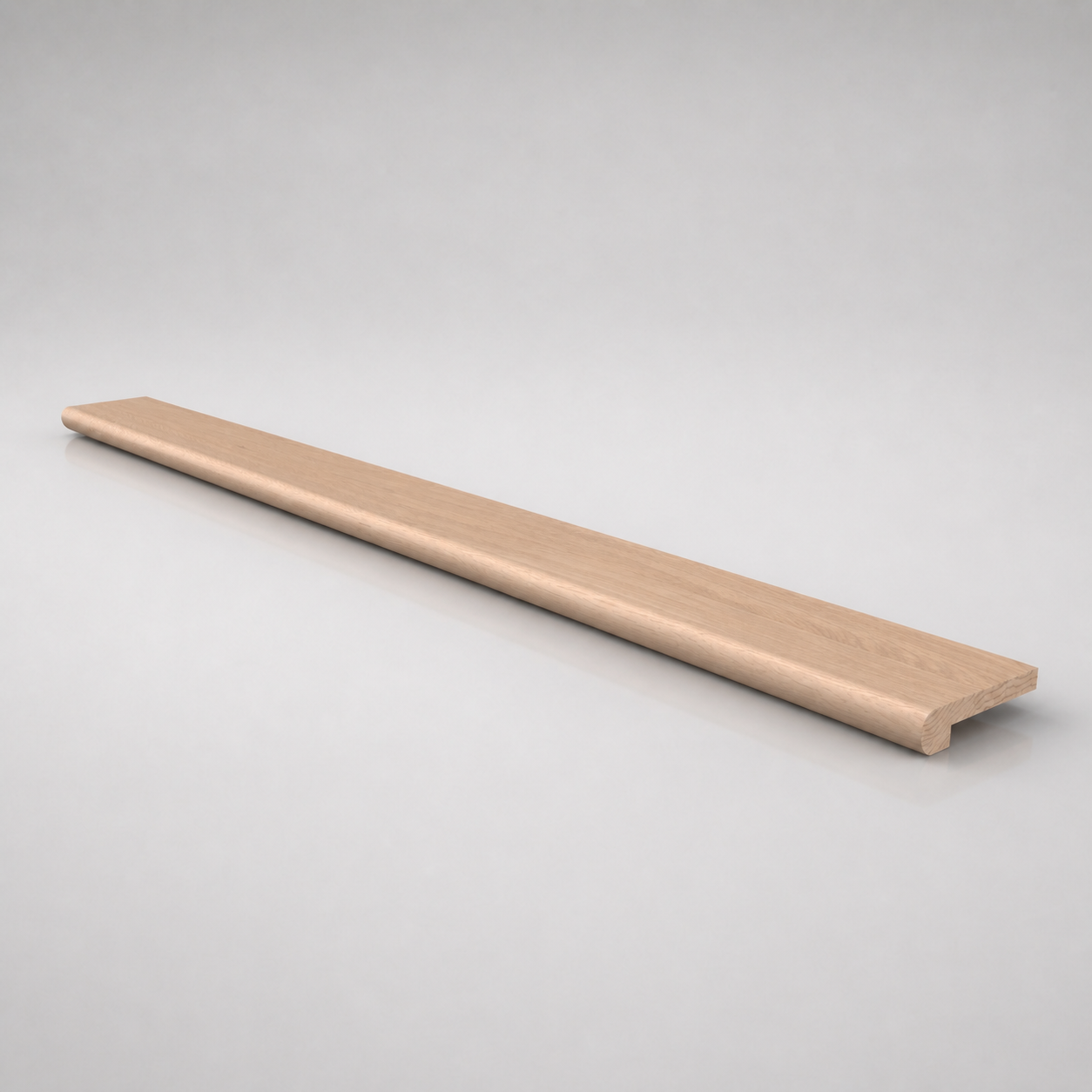 GuideStair partsLanding Tread: What Is a Landing Tread?Learn what a landing tread is, how it differs from a stair tread, where landing treads are used, and when you need a landing panel instead.8 min read
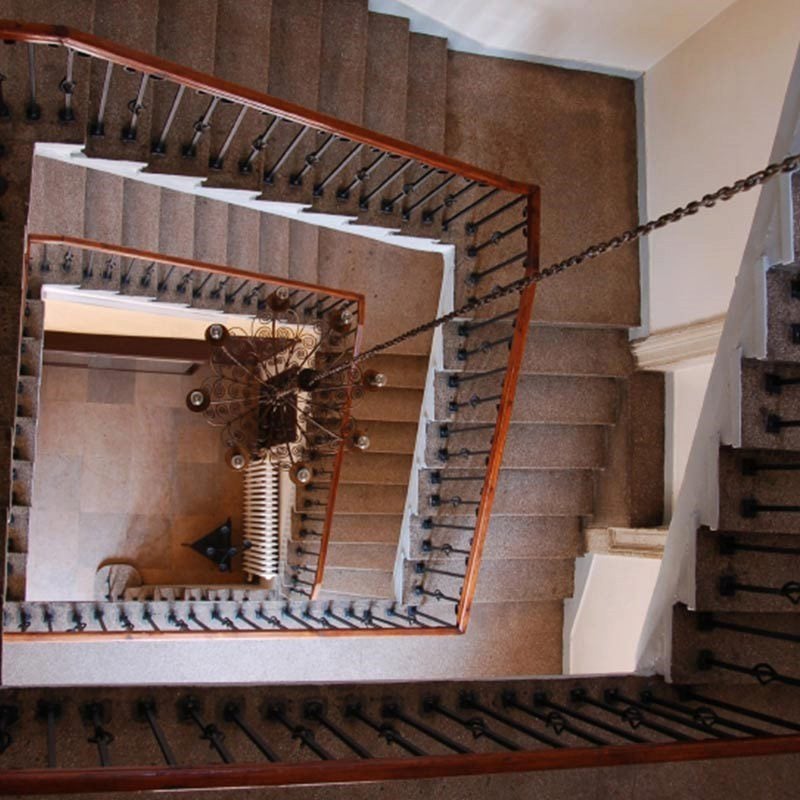 GuideStair partsBaluster: What Is a Baluster?A baluster is the vertical post that fills the open space of a stair railing. Learn how they differ from spindles and pickets, sizing, spacing, and more.9 min read