
Stair parts · 7 min read
Balustrade: What Is a Balustrade?
A balustrade is the complete stair railing system: handrail, balusters, newel posts, and base rail. Learn the parts and how they fit together.
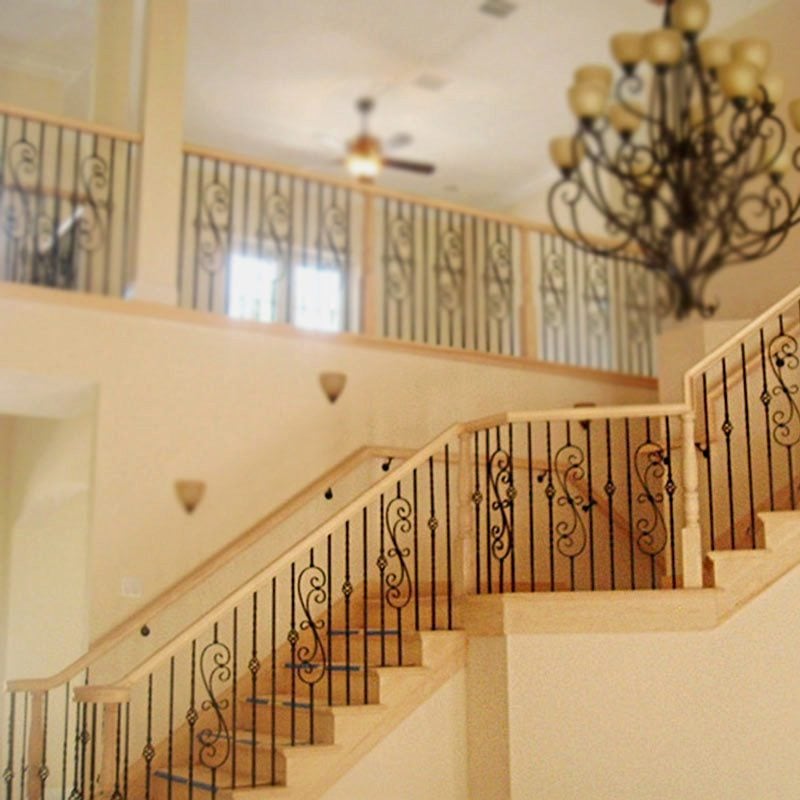
A balustrade is the complete railing assembly on a staircase or landing. It includes the handrail, balusters, newel posts, and base rail — every component that forms the finished railing system working together. It's one of the most visible parts of a staircase, and it does two things at once: it keeps people from falling off the edge of the stair, and it defines the visual character of the whole space.
Parts of a Balustrade
A balustrade is a system of components, not a single piece. Here's what goes into it.
Handrail
The handrail is the top rail — the graspable portion at the top of the balustrade that you hold when climbing or descending. Building code requires it to be graspable, which means its profile has to allow the hand to wrap around it fully. Profile, height, and mounting system all matter. See what is a handrail for a full breakdown.
Balusters
Balusters are the vertical posts that fill the space between the handrail and the base. They're what you see when you look at a railing. They guard the open side of the stair, preventing falls through the railing infill. Most residential balustrades use either wood turned balusters or iron powder-coated balusters. See what is a baluster for the full detail on types, sizes, and spacing.
Newel Posts
Newel posts are the large structural posts at the base, turns, and top of the staircase that anchor the entire balustrade. The handrail connects to them. The balusters run between them. Without a properly anchored newel, the balustrade can't meet code load requirements. See what is a newel post for types and anchoring methods.
Shoe Rail / Base Rail
The shoe rail (sometimes called the base rail or floor rail) is a horizontal rail that runs along the treads or landing floor at the base of the balustrade, below the balusters. Not all systems use one. Post-to-post systems with iron balusters often use a shoe rail with a routed groove that accepts baluster feet. Over-the-post systems and some wood baluster layouts connect balusters directly to the tread without a base rail.
Fillet
A fillet is the thin wood strip fitted between balusters inside a plowed shoe rail or plowed handrail groove. It fills the space between balusters, holding them in position and creating a clean finished look at the rail bottom. Fillets are cut to length on-site and fit snugly between each pair of balusters.
Balustrade vs. Banister vs. Baluster
These three words trip up almost everyone. Here's the clear version.
Balustrade is the whole system: handrail + balusters + newel posts + base rail. The complete railing assembly.
Banister is the informal everyday word for either the handrail or the whole balustrade, depending on who's using it. It doesn't have a single precise meaning in common use. When a homeowner says "banister," they often mean the balustrade. Read the full what is a banister article for the disambiguation.
Baluster is a single vertical post — one of dozens in the infill. It's a part of the balustrade, not the balustrade itself.
Balustrade: the system. Banister: the rail (or colloquially, the system). Baluster: one post.
Post-to-Post vs. Over-the-Post Systems
A balustrade is assembled in one of two ways, and the choice determines which components you need.
Post-to-post: The handrail runs between newel posts, terminating at the side of each newel. The balusters connect to the tread below and the handrail above. This system is cleaner and more contemporary. It's also easier to install because the rail doesn't have to pass over the newel tops.
Over-the-post: The handrail runs continuously over the tops of the newel posts, connected via fittings (volutes, goosenecks, easings). This system creates a more traditional, formal look. The fittings that allow the rail to navigate turns and terminations are part of what makes over-the-post balustrades feel so refined — and more complex to build.
Both systems can use wood or iron balusters. The rail profile and fittings you select will depend on which system you're building.
Wood, Iron, and Cable Balustrades
The infill material changes both the look and the installation method.
Wood balusters are traditional. Turned profiles, square profiles, and flat panel profiles are common. They paint or stain to match the stair. Install is via dowel into the tread and fitting into the plowed rail above.
Iron balusters dominate the current market. Powder-coated steel in black, bronze, or oil-rubbed bronze finishes. Dozens of profile options: twist, basket, hammered, plain square. Install is via the iron baluster drill-and-epoxy method or shoe mount. They're durable, consistent, and don't split or warp.
Cable railing uses tensioned horizontal or vertical cables as the infill instead of balusters. The handrail and newel posts remain, but the vertical post infill is replaced with cable runs. It's the most open and contemporary look — and it comes with its own code requirements around cable tension and spacing.
Whatever infill you choose, the structural logic of the balustrade is the same: newels anchor the system, the handrail spans between them, and the infill fills the guardrail opening.
Shop balustrade components
A balustrade is ordered as parts, not a kit: rail, infill, newels, and the fittings that join them.
Stair handrail · Handrail fittings · Wood balusters · Iron balusters · All newels · Shoe rail
FAQ
What is a balustrade?
A balustrade is the complete railing assembly on a staircase or landing, including the handrail, balusters, newel posts, and base rail. It's the full system — not a single component.
What's the difference between a balustrade and a banister?
A balustrade is the technical term for the complete railing system. A banister is the informal everyday word that usually refers to the handrail or the whole railing assembly. In precise use: balustrade = the system; banister = the handrail (or loosely, the system).
What's the difference between a balustrade and a baluster?
A balustrade is the whole railing system. A baluster is a single vertical post within that system — one component among many. The word "baluster" is built into "balustrade": the balustrade is named for its balusters.
What are the parts of a balustrade?
The parts are: handrail (top gripping rail), balusters (vertical infill posts), newel posts (large anchor posts at starts, turns, and top), shoe rail or base rail (bottom horizontal rail in some systems), and fillets (thin strips between balusters in plowed rail grooves).
Internal links: Hub: Stair Anatomy · What Is a Banister? · What Is a Baluster? · What Is a Newel Post? · What Is a Handrail?
Keep reading
All resources GuideStair partsRise and Run: What Are They and How Do You Calculate Them?Rise and run are the two core dimensions of every stair step. Learn the standard sizes, how to calculate them, and what the building code requires.8 min read
 GuideStair partsLanding Tread: What Is a Landing Tread?Learn what a landing tread is, how it differs from a stair tread, where landing treads are used, and when you need a landing panel instead.8 min read
 GuideStair partsBaluster: What Is a Baluster?A baluster is the vertical post that fills the open space of a stair railing. Learn how they differ from spindles and pickets, sizing, spacing, and more.9 min read