
Stair parts · 8 min read
Flight of Stairs: What Is a Flight?
A flight of stairs is an uninterrupted run of steps between two levels. Learn how many stairs make a flight, the etymology, and how flights relate to landings.
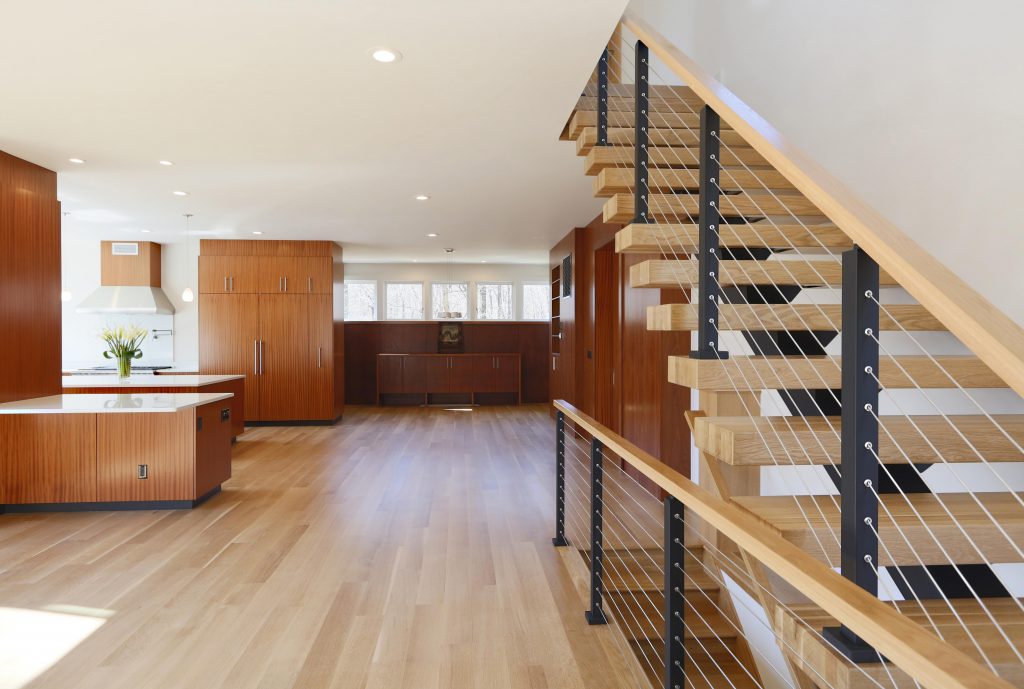
A flight of stairs is an uninterrupted run of steps between two floor levels or landings, without any turn or landing break in between. It's one of the fundamental organizing concepts in stair design — and one of the parts of a staircase that most people understand intuitively even if they've never heard the term. When you walk up stairs without stopping to turn, you're climbing a single flight.
How Many Stairs Are in a Flight?
There's no fixed number. A flight of stairs is defined by continuity — an unbroken run of steps — not by step count.
That said, residential flights typically run 12 to 16 risers. Here's why that range is common: a standard floor-to-floor height in residential construction is around 9 feet (108 inches). Divide that by a target unit rise of 7.71 inches and you get 14 risers — a typical residential flight in a standard home.
Higher ceilings push that number up. Lower ceilings bring it down. A home with 8-foot ceilings might have 12 or 13 risers per flight. A home with 10-foot ceilings might have 15 or 16.
Building codes don't set a maximum number of steps per flight directly. They limit rise, run, headroom, and consistency between steps — but not step count. See the residential stair building code for the actual limits that apply.
How Many Flights Per Floor?
A standard two-story home has one flight of stairs between the first and second floors. That single flight covers the full floor-to-floor height.
Larger or more complex homes change the math. An L-shaped stair has two flights separated by a landing at the turn. A U-shaped stair has two flights separated by a wider landing at the midpoint. A home with a split-level layout may have short flights of just 4 to 6 steps between intermediate levels.
Multi-story buildings stack flights vertically, one per floor or sometimes one per half-floor with an intermediate landing in between. Each continuous run without a break counts as its own flight. Read more about stair configurations in the L-shaped vs. straight vs. spiral stairs guide.
Why Is It Called a "Flight" of Stairs?
The word is Germanic, not Latin. "Flight" comes from Old English flyht, "a flying," from Proto-Germanic *flukhtiz and ultimately the Indo-European root *pleu-, meaning "to flow." The same root sits behind the flight of a bird: unbroken movement through space.
The stair sense arrived later. By the 1680s, "fly" was being used of stairs to mean ascending without a change of direction, and the noun phrase "flight of stairs" — a series of steps between landings — is attested by 1703. Some etymologists also see the influence of the French volée d'escalier, which carries the same image.
Either way, the metaphor is motion. A flight of stairs flows from one level to the next without interruption, and the moment a landing breaks that flow, the flight ends.
Flights, Landings, and Winders
A landing interrupts a flight. The moment there's a horizontal platform breaking the continuous run of steps, the stair before the landing is one flight and the stair after is another.
Landings serve two purposes. First, they give people a place to rest on long stair runs. Second, they allow the stair to change direction — from an L-turn to a full U-turn — without the stair consuming a larger floor footprint.
Winders are the alternative to landings at turns. Instead of a flat platform, winders are angled (pie-shaped) steps that rotate the stair direction within the flight itself. Because winders don't interrupt the continuous run of steps, a stair with winders is technically still a single flight — it just changes direction mid-climb.
The tradeoff is comfort and safety. Landings provide a full flat pause. Winders maintain stair momentum but narrow at the inside edge, which can feel unstable underfoot. Building codes regulate winder geometry carefully. The winder stairs code requirements page covers the specific limits.
Why flight count matters when you're ordering
How many risers land in a flight follows directly from the total rise — see rise and run for the calculation. Flights are also the unit you estimate parts in. Each one needs its own continuous handrail run, and each break between flights needs a newel to terminate one rail and start the next — which is why a two-flight L-shaped stair needs four newels where a straight run needs two.
Three questions decide most of a parts list:
How many flights? Each adds a rail run and at least one newel.
Does the rail stay continuous through the landing? If yes, you need a gooseneck fitting rather than a second terminated run.
Does the turn use a landing or winders? Winders keep it one flight and one continuous rail; a landing splits it in two.
Get those three answers before pricing anything, because they change the fitting count more than the step count does.
Shop by the flight
Flight count drives your parts list — each flight needs its own rail run and terminating newels.
Wood stair treads · Stair handrail · All newels
FAQ
What is a flight of stairs?
A flight of stairs is an uninterrupted run of steps between two floor levels or landings, with no turns or landing breaks within the run. It's the basic unit of a staircase — one continuous sequence of steps from point A to point B.
Is there a maximum number of stairs in one flight?
The IRC sets no limit on step count, but it does cap vertical travel: under IRC R311.7.3 a flight may not have a vertical rise greater than 151 inches (12 feet 7 inches) between floor levels or landings. At a typical 7.5-inch rise that's about 20 risers before a landing becomes mandatory — well above the 12 to 16 found in most homes. The rule exists so nobody faces an unbroken climb without a level place to stop.
Why is it called a flight of stairs?
"Flight" comes from Old English flyht, "a flying," from an Indo-European root meaning "to flow" — the same word behind a bird's flight. Applied to stairs it captures an uninterrupted sweep from one level to the next. "Fly" was used of stairs by the 1680s, and the phrase "flight of stairs" is attested by 1703.
What is the difference between a flight and a run of stairs?
These terms are often used interchangeably. "Run" can mean the same thing as "flight" — a continuous sequence of steps. "Run" is also used technically to mean the horizontal depth of a single step (unit run) or the total horizontal footprint of the staircase (total run). "Flight" more specifically means the unbroken vertical sequence without a landing. Context determines which meaning applies.
Internal links: Hub: Stair Anatomy · What Is a Stair Tread? · Stair Rise and Run
Keep reading
All resources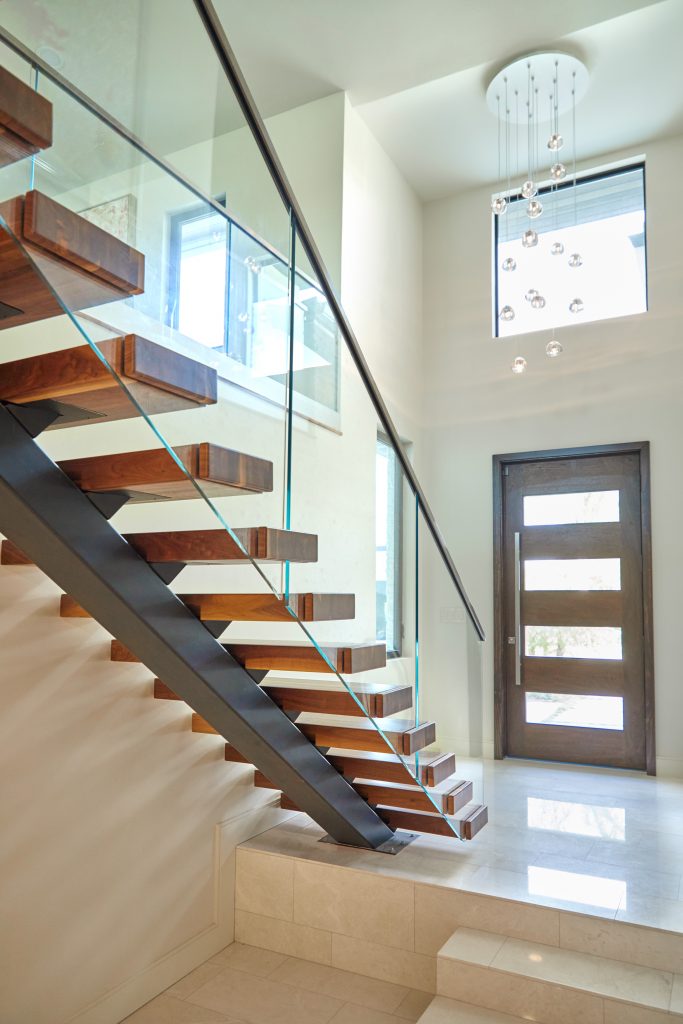 GuideStair partsRise and Run: What Are They and How Do You Calculate Them?Rise and run are the two core dimensions of every stair step. Learn the standard sizes, how to calculate them, and what the building code requires.8 min read
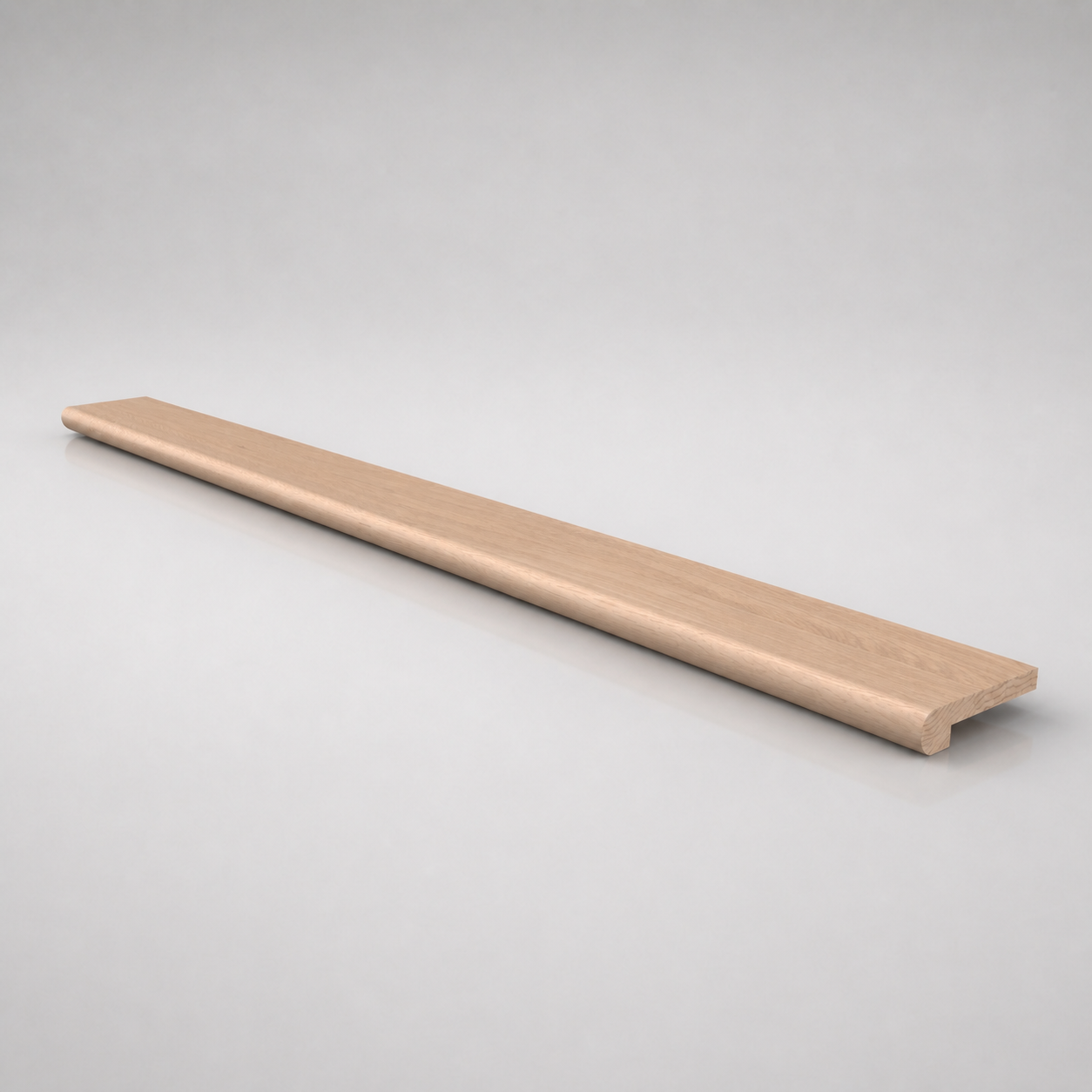 GuideStair partsLanding Tread: What Is a Landing Tread?Learn what a landing tread is, how it differs from a stair tread, where landing treads are used, and when you need a landing panel instead.8 min read
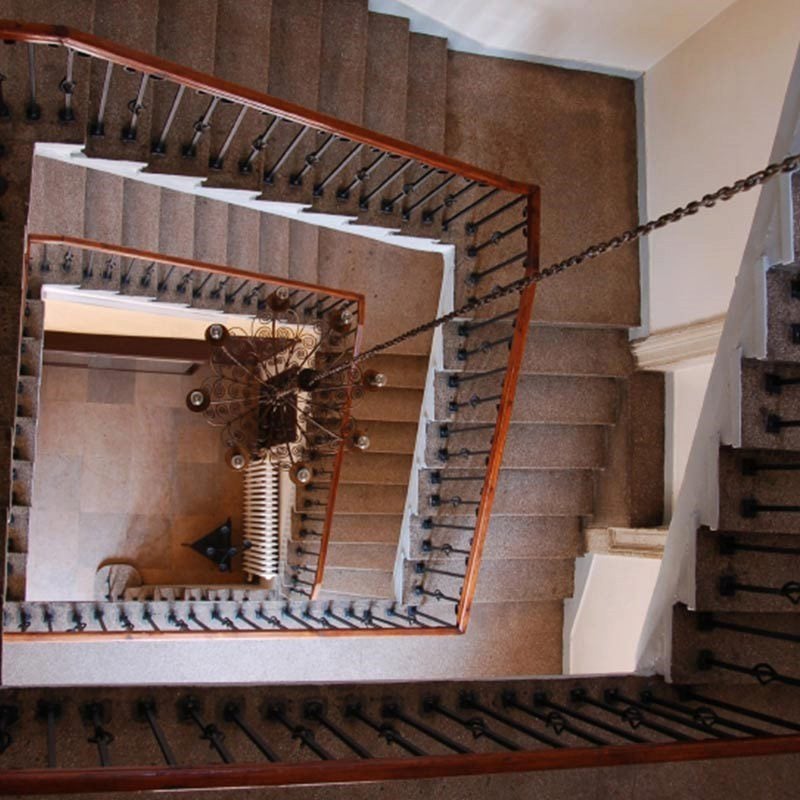 GuideStair partsBaluster: What Is a Baluster?A baluster is the vertical post that fills the open space of a stair railing. Learn how they differ from spindles and pickets, sizing, spacing, and more.9 min read