
Stair parts · 9 min read
Newel Post: What Is a Newel Post?
A newel post is the large anchor post at the base, turns, and top of a staircase. Learn the types, sizes, and how each one attaches.
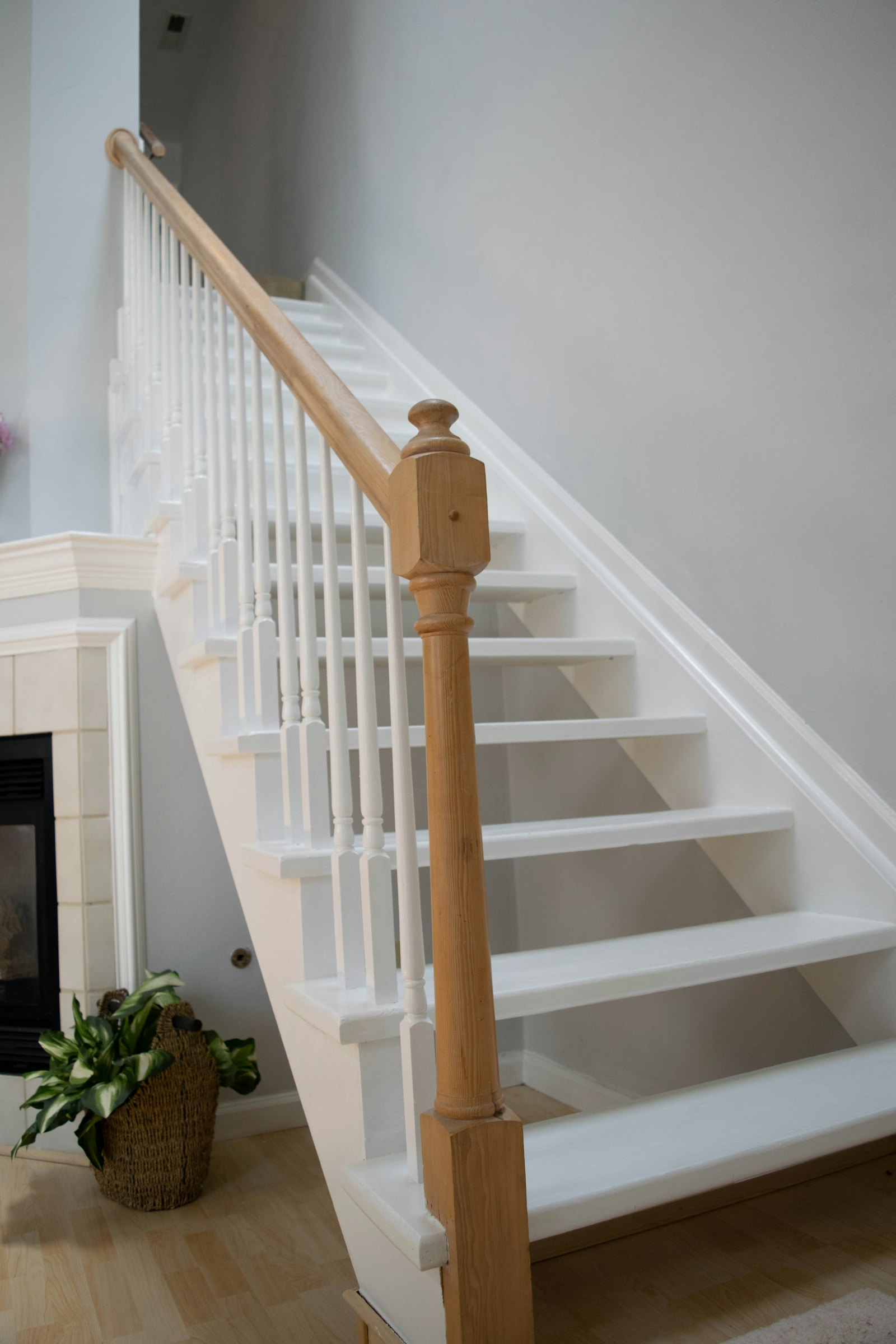
A newel post is the large structural post that anchors the handrail at the start, turns, and top of a staircase. If you've ever grabbed the big post at the bottom of a flight of stairs, you've grabbed a newel. It's the foundation of the entire railing system. Understanding newel posts is a core part of knowing the parts of a staircase — everything else in the balustrade traces back to where the newels are planted.
What a Newel Post Does Structurally
The newel post isn't decorative first — it's structural first. It transfers the lateral load from the handrail into the stringer or the floor framing below. Code requires that guardrail systems resist a 200-pound lateral load at the top rail. The newel post is what makes that possible.
A loose or poorly anchored newel post is the most common railing failure. Wobble in the newel means the whole system is compromised. The post needs to be anchored deep — either bolted through the stringer, lagged into floor framing, or secured with a dedicated newel mounting bolt system.
What Is a Box Newel?
A box newel is the most popular newel style in traditional and craftsman homes. It's built up from flat panels and trim assembled around an inner structural post. The result looks like a solid, wide post — but the structure inside is typically a 4×4 or threaded rod.
Box newels feel substantial. They take up more visual space than turned newels, which makes them a natural fit for wide staircases and open foyers. They can be built on-site or purchased pre-assembled. The flat panels lend themselves to paint rather than stain.
Starting Newel vs. Landing Newel vs. Intermediate Newel
Not all newels are the same. Their position on the stair determines how they anchor.
Starting newel: The post at the very bottom of the staircase. It typically sits on the floor beside the first tread or on the tread itself — which changes its required height by a full riser. Starting newels take the most stress because that's where people grab the rail and push off. Anchoring method: lagged to floor framing below, or bolted through the tread and stringer.
Landing newel (turn newel): The post at a landing where the stair changes direction. It transitions the rail from one flight to the next. These often carry handrail connections on two or more faces. Anchoring method: lagged into the landing platform framing.
Top newel: The post at the top of the staircase. It terminates the rail and anchors the balustrade at the upper level. Anchoring method: similar to the starting newel, lagged into the floor framing.
Intermediate newel: Any additional post added mid-rail on a long landing run to prevent rail flex. These don't carry a turn — they just add stability.
Half Newels and Rosettes
When a staircase meets a wall, you have two options for terminating the rail and balustrade.
Half newel: A newel post split vertically, with the flat face mounted flush against the wall. It gives the visual appearance of a full newel while fitting tight to a wall surface. Half newels are common at the top of a stair where the rail ends at a wall rather than an open landing.
Rosette: A circular or square decorative wall plate. When the handrail terminates into a wall, a rosette provides a clean finish at the point of contact. It's simpler than a half newel and works well in tighter spaces or more minimalist designs.
Utility and Pin-Top Newels
Two newel types serve specific system requirements rather than aesthetic ones.
Utility newel: A plain square post used in over-the-post railing systems. The rail passes over the top of the newel rather than connecting to its side. These are usually undecorated and get covered by a cap or volute fitting.
Pin-top newel: A decorative version of the utility newel with a turned or shaped top. The handrail still passes over the post, but the visible pin top adds a finishing detail above the rail line.
Newel Post Sizes
Standard residential newel post sizing follows the stair's visual scale.
Turned newels: Typically 3-1/2 inches × 3-1/2 inches square at the base. Heights run 48 to 54 inches above the tread at the bottom of the stair.
Box newels: 5 inches × 5 inches or larger, depending on the base platform. The larger profile suits wider treads and more formal foyer applications.
Commercial or heavy residential: Posts up to 6 × 6 are used in high-traffic or high-ceiling applications.
Height matters. A newel that's too short will make the handrail feel low, and it is the newel that anchors the whole balustrade. Most starting newels are cut to bring the handrail to 34 to 38 inches above the tread nosing — the IRC-required handrail height range per the handrail height requirements guide.
Newel vs. Baluster
People sometimes confuse newels and balusters. They're different in every way.
A newel is large, structural, and anchored to the floor or stringer. There are typically two to four per staircase. A baluster is smaller, fills the space between newels, and is anchored to the tread and rail. There are typically dozens per staircase.
The newel anchors the system. The balusters fill it.
Signs a Newel Post Is Failing
A newel is the one part of a balustrade whose failure is progressive rather than sudden, which means you usually get warning.
Movement at the base. Grip the post at rail height and push laterally. Any visible rock means the anchor has loosened — this is the failure mode, and it gets worse under use.
A gap opening at the floor. A hairline shadow at the base trim that wasn't there last year indicates the post is working against its fastener.
The rail moves with the post. If pushing the handrail moves the newel, the whole balustrade is relying on a connection that is no longer tight.
Splitting at the bolt pocket. On older posts, the access hole for the rail bolt can split out under repeated load.
A loose newel is not a cosmetic problem. It is the anchor for a system code expects to resist a 200-pound load, and it is the most common railing failure there is. Retightening is often possible if the fastener is accessible; if the original attachment was surface screws alone, the fix is re-anchoring, not tightening.
How to Measure for a Replacement Newel
Height: floor (or tread) to the underside of the handrail, then add the depth the rail fitting sits into or over the post. Starting newels are usually cut on site, so order long.
Width: measure the shaft, not the base plinth or cap — those overhang.
Position: note whether the post sits on the floor beside the first tread or on the tread itself. That single detail changes the required height by a full riser.
Shop newel posts
Newel height depends on where the post lands — floor or tread — so confirm the position before ordering.
All newels · Box newels · Starting newel · Level-run newel · Iron newels
FAQ
What is a newel post?
A newel post is the large structural post that anchors the handrail system at the base, turns, and top of a staircase. It transfers railing loads to the floor or stringer framing and serves as the visual anchor point of the balustrade.
What is a newel?
"Newel" is shorthand for "newel post." The two terms mean the same thing. In older usage, "newel" sometimes referred specifically to the central column of a spiral stair — the post that the treads wind around. In modern residential use, it means the anchor post of any stair railing.
How many newel posts does a staircase need?
At minimum two — one at the bottom, one at the top. Every change of direction adds one, so an L-shaped stair with a landing typically needs four, and a U-shaped stair needs four to six. Long level runs may need an intermediate post to stop the rail flexing. Count the turns before you count the posts.
How are newel posts attached?
Newel posts are anchored to the stringer, tread, or floor framing using lag bolts, threaded rods, or dedicated newel mounting hardware. The anchor must resist at least 200 pounds of lateral force at the top. Surface attachment alone (just glue or a few screws) isn't sufficient.
What are the different types of newel posts?
The main types are: starting newel (bottom of the stair), landing or turn newel (at direction changes), top newel (top of the stair), half newel (wall-mounted split post), utility newel (plain square for over-the-post systems), and pin-top newel (decorative cap for over-the-post). Box newel is a style rather than a positional type — any of these can be built in a box-newel style.
Internal links: Hub: Stair Anatomy · What Is a Baluster? · What Is a Balustrade? · What Is a Handrail?
Keep reading
All resources GuideStair partsRise and Run: What Are They and How Do You Calculate Them?Rise and run are the two core dimensions of every stair step. Learn the standard sizes, how to calculate them, and what the building code requires.8 min read
 GuideStair partsLanding Tread: What Is a Landing Tread?Learn what a landing tread is, how it differs from a stair tread, where landing treads are used, and when you need a landing panel instead.8 min read
 GuideStair partsBaluster: What Is a Baluster?A baluster is the vertical post that fills the open space of a stair railing. Learn how they differ from spindles and pickets, sizing, spacing, and more.9 min read